
When I am dead and over me bright April
Shakes out her rain-drenched hair,
Though you should lean above me broken-hearted,
I shall not care.
I shall have peace, as leafy trees are peaceful
When rain bends down the bough;
And I shall be more silent and cold-hearted
Than you are now.
-– Sara Teasdale
Saturday, March 28, 2009

Friday, March 27, 2009
Malawi
 I watched I Am Because We Are, Madonna's film about Malawi. I don't necessarily recommend it, it's pretty straightforward stuff. But the central point is an astounding one.
Malawi, a country of 12 million people, has one million orphans, due to AIDS. Far more children than can fit in orphanages, they are just everywhere, living under bridges and cars, even tiny children absolutely on their own out in the world. It's crazy.
And she points out that, yes, they need food, and they need access to medicines, and they need economic development, and education, but none of that is enough. These are children. They need someone to raise them.
Would you?
I never really thought about it, but I have great respect for Madonna's choice to adopt a Malawian child. And I find it hard to justify how I could choose to bring my own child into the world when there's so many in need.
Not that this makes up for all the awful things Madonna has done.
Thursday, March 26, 2009
Freeman Dyson
The New York Times Magazine has a piece on physicist Freeman Dyson which wasn't great, but presents a fascinatingly storybook back story, with bits interesting enough that they're worth sharing:
At Twyford — like George Orwell, who was flogged, starved and humiliated by masters and bigger boys at St. Cyprian’s — Dyson says he felt brutalized by a whip-wielding headmaster who offered no science classes, favoring Latin, and by a clique of athletes who liked to rub sandpaper on the faces of the smaller children. “In those days it was unthinkable that parents would come to see what was going on,” Dyson says. “My parents lived only three miles away. They never came to visit. It wasn’t done.” Dyson took comfort in climbing tall trees, reading “The Wonderful Wizard of Oz,” which gave him a first sense of America as a more “exciting place where all sorts of weird things could happen,” and Jules Verne’s comic science-fiction descriptions of more “crazy Americans” bound for the moon. His primary consolation, however, was the science society he founded with a few friends. Dyson would later reflect that from then on he saw science as “a territory of freedom and friendship in the midst of tyranny and hatred.” [Note: This reminds me of Eric Idle's Ripping Yarns]
...Dyson says he can “remember so vividly lying in bed at age 15, absolutely enjoying hearing the bombs go off with a wonderful crunching noise. I said, ‘That’s the sound of the British Empire crumbling.’ I had a sense that the British Empire was evil. The fact that I might get hit didn’t register at all.”
...During World War II, Dyson worked for the Royal Air Force at Bomber Command, calculating the most effective ways to deploy pilots, some of whom he knew would die. Dyson says he was “sickened” and “depressed” that many more planes were going down than needed to because military leadership relied on misguided institutional mythologies rather than statistical studies. Even more upsetting, Dyson writes in “Weapons and Hope,” he became an expert on “how to murder most economically another hundred thousand people.” This work, Dyson told the writer Kenneth Brower, created an “emptiness of the soul.”
...“I felt it myself, the glitter of nuclear weapons. It is irresistible if you come to them as a scientist. To feel it’s there in your hands. To release the energy that fuels the stars. To let it do your bidding. And to perform these miracles, to lift a million tons of rock into the sky, it is something that gives people an illusion of illimitable power, and it is in some ways responsible for all our troubles, I would say, this what you might call ‘technical arrogance’ that overcomes people when they see what they can do with their minds.”
At Twyford — like George Orwell, who was flogged, starved and humiliated by masters and bigger boys at St. Cyprian’s — Dyson says he felt brutalized by a whip-wielding headmaster who offered no science classes, favoring Latin, and by a clique of athletes who liked to rub sandpaper on the faces of the smaller children. “In those days it was unthinkable that parents would come to see what was going on,” Dyson says. “My parents lived only three miles away. They never came to visit. It wasn’t done.” Dyson took comfort in climbing tall trees, reading “The Wonderful Wizard of Oz,” which gave him a first sense of America as a more “exciting place where all sorts of weird things could happen,” and Jules Verne’s comic science-fiction descriptions of more “crazy Americans” bound for the moon. His primary consolation, however, was the science society he founded with a few friends. Dyson would later reflect that from then on he saw science as “a territory of freedom and friendship in the midst of tyranny and hatred.” [Note: This reminds me of Eric Idle's Ripping Yarns]
...Dyson says he can “remember so vividly lying in bed at age 15, absolutely enjoying hearing the bombs go off with a wonderful crunching noise. I said, ‘That’s the sound of the British Empire crumbling.’ I had a sense that the British Empire was evil. The fact that I might get hit didn’t register at all.”
...During World War II, Dyson worked for the Royal Air Force at Bomber Command, calculating the most effective ways to deploy pilots, some of whom he knew would die. Dyson says he was “sickened” and “depressed” that many more planes were going down than needed to because military leadership relied on misguided institutional mythologies rather than statistical studies. Even more upsetting, Dyson writes in “Weapons and Hope,” he became an expert on “how to murder most economically another hundred thousand people.” This work, Dyson told the writer Kenneth Brower, created an “emptiness of the soul.”
...“I felt it myself, the glitter of nuclear weapons. It is irresistible if you come to them as a scientist. To feel it’s there in your hands. To release the energy that fuels the stars. To let it do your bidding. And to perform these miracles, to lift a million tons of rock into the sky, it is something that gives people an illusion of illimitable power, and it is in some ways responsible for all our troubles, I would say, this what you might call ‘technical arrogance’ that overcomes people when they see what they can do with their minds.”
Wednesday, March 25, 2009
Food Fight and Kudo Beans
Tonight I tried two just-opened spots in the Village.
 Food Fight is a tiny spot on MacDougal Street that sells mini-burgers. They're cute. The red-and-black decor looks hip but also very harsh, not exactly a pleasant place to hang out. (Then again, in a small joint like that maybe they don't want you to linger?) I got the portobello mushroom burgers. They were fine, nothing amazing but perfectly acceptable, and on top of that they were cute, and not greasy. So, it's good to have that as an option. They also sold teensy cupcakes -- each the size of a quarter -- which were adorable but couldn't possibly be satisfying!
Then I tried Kudo Beans, a Korean cafe opening here its third location in the US right at the exit of the West 4th Street subway. It doesn't look Korean at all, and the tea certainly isn't Korean (though they serve coffee, the tea was what was on display), though the staff was all Korean and the desert case had Korean-style cakes. It's hard to judge the place, because this was their "test week" and they didn't have everything together. I tried their Kama Chai Sutra tea, and was disappointed. But based on looks, I like this place better than the nearby Tea Spot, and really there's no place for good tea in the NYU area, so its another option I'm glad to have.
 Food Fight is a tiny spot on MacDougal Street that sells mini-burgers. They're cute. The red-and-black decor looks hip but also very harsh, not exactly a pleasant place to hang out. (Then again, in a small joint like that maybe they don't want you to linger?) I got the portobello mushroom burgers. They were fine, nothing amazing but perfectly acceptable, and on top of that they were cute, and not greasy. So, it's good to have that as an option. They also sold teensy cupcakes -- each the size of a quarter -- which were adorable but couldn't possibly be satisfying!
Then I tried Kudo Beans, a Korean cafe opening here its third location in the US right at the exit of the West 4th Street subway. It doesn't look Korean at all, and the tea certainly isn't Korean (though they serve coffee, the tea was what was on display), though the staff was all Korean and the desert case had Korean-style cakes. It's hard to judge the place, because this was their "test week" and they didn't have everything together. I tried their Kama Chai Sutra tea, and was disappointed. But based on looks, I like this place better than the nearby Tea Spot, and really there's no place for good tea in the NYU area, so its another option I'm glad to have.
Tuesday, March 24, 2009
The Quiet Woman
I will defy you down until my death
With cold body, indrawn breath;
Terrible and cruel I will move with you
Like a surly tiger. If you knew
Why I am shaken, if fond you could see
All the caged arrogance in me,
You would not lean so boyishly, so bold,
To kiss my body, quivering and cold.
With cold body, indrawn breath;
Terrible and cruel I will move with you
Like a surly tiger. If you knew
Why I am shaken, if fond you could see
All the caged arrogance in me,
You would not lean so boyishly, so bold,
To kiss my body, quivering and cold.
-- Genevieve Taggard
Monday, March 23, 2009
Supreme Master
This I was interviewed by Supreme Master Television, an international satellite station, on my global warming work. Right now, a sound bite of audio is included in their news segment, which runs after their shows. (I get a kick out of knowing I appear twice now on the Internet Movie Database.)
On a similar topic, ABC news reports today a U.S. National Cancer Institute study found that eating meat shortens the lifespan. In fact, "reducing meat consumption to the amount eaten by the bottom 20 percent seen in the study would save 11 percent of men's lives and 16 percent of women's, according to the study." It affects death "not just from cancer and heart disease but from Alzheimer's, stomach ulcers and an array of other conditions as well." So if you're not moved by knowing that animals are being strangled to death, shocked in the eyes, thrown alive in trash can to starve, and kept so deep in their own filth that they're covered with ammonia burns, then maybe self-interest will motivate you to make the switch.
On a similar topic, ABC news reports today a U.S. National Cancer Institute study found that eating meat shortens the lifespan. In fact, "reducing meat consumption to the amount eaten by the bottom 20 percent seen in the study would save 11 percent of men's lives and 16 percent of women's, according to the study." It affects death "not just from cancer and heart disease but from Alzheimer's, stomach ulcers and an array of other conditions as well." So if you're not moved by knowing that animals are being strangled to death, shocked in the eyes, thrown alive in trash can to starve, and kept so deep in their own filth that they're covered with ammonia burns, then maybe self-interest will motivate you to make the switch.
Sunday, March 22, 2009
Spring Street Natural and Luxee
Yesterday I had dinner at a new place in Nolita, Spring Street Natural. The decor struck me as a standard look for nice "box-store" restaurants outside of New York, rather generic and without character but still classy. Their food was "natural" in a healthy-and-it-tastes-healthy kind of way. So the food review is mixed. Their carrot bread was amazing. I ordered the croquettes, which were delicious. But the side dishes--snap peas and I think a daikon slaw--was very plain, as was another organic vegetable dish. Then again, maybe you like that kind of thing, healthy and proud of it. For me, it was a combo of really delicious and really, um, "healthy" in its euphemistic sense.
 I also went to a dessert bar in the Lower East Side called Luxee. I went for their Orange Spice Trifle (shown), because it was their vegan menu option. It was delicious! (And didn't taste the slightest bit vegan, for that matter.) I also had their Green Forest Parfait from their dessert case (also vegan), which included chocolate mousse and an avocado (!) cream, which fortunately didn't taste like avocado to me. The parfait was good, but not at the level of the trifle. I recommend that highly. The entire place is a very nice spot, although at ten blocks from the subway, you should go in good weather if you're a delicate princess.
I also went to a dessert bar in the Lower East Side called Luxee. I went for their Orange Spice Trifle (shown), because it was their vegan menu option. It was delicious! (And didn't taste the slightest bit vegan, for that matter.) I also had their Green Forest Parfait from their dessert case (also vegan), which included chocolate mousse and an avocado (!) cream, which fortunately didn't taste like avocado to me. The parfait was good, but not at the level of the trifle. I recommend that highly. The entire place is a very nice spot, although at ten blocks from the subway, you should go in good weather if you're a delicate princess.
Friday, March 20, 2009
Shmeat
The other day The Colbert Report did a segment on lab-grown meat. You may be aware that PETA has offered a reward of $1 million for whoever comes up with commercially priced meat production in a petri dish (thus without hurting animals). Colbert quoted the scientist saying that some call this product shmeat, "a combination of sh**t and meat". Ha-ha, but what he didn't say, of course, is that the bleeped out word was "sheet", because the animal muscle is grown in sheets.
Thursday, March 19, 2009
Seal clubbing
 Good news: Russia has banned the slaughter of baby seals! This year that will save 35,000 seals, who are clubbed to death for their fur. Earlier this month legislation to ban trade in seal products advanced in the European Parliament.
Don't stop there: the world's largest seal slaughter is in Canada, starting in just three days. You can help stop it: sign a pledge to boycott Canadian seafood. The seal killers catch seafood year round, and club seals on the side during part of the year. The only way to pressure them to stop is to show that they're paying a cost for continuing the hunt. An independent team of veterinarians found that in 42% of the cases they studied, the seals had likely been skinned alive while conscious. It's in your hands: Sign the pledge to join the boycott.
(Done that? Don't stop -- just a quick call to your legislators, "Please support the Great Ape Protection Act (H.R. 1326)" -- can spare 500 chimpanzees (with the intelligence of children) a life of deprivation languishing in cages by sending them to a sanctuary. There's more info here.)
Wednesday, March 18, 2009
Psychology of helping others
Following up on yesterday's post, there are a number of psychological studies that are revealing about people's contributions to charitable causes -- and in particular, why people who would save a drowning child fail to save children right now dying of causes just as easy to ameliorate.
- In an experiment, one group was given general information about the need for donations, including statements like "Food shortages in Malawi are affecting more than 3 million children." A second group was shown the photo of a 7-year-old Malian girl named Rokia, and told that she is desperately poor, and that "her life will be changed for the better by your gift." People in the second group gave more.
- Anyone with a little money to spare could save the poor child dying from diarrhea. That diffusion of responsibility brings out what psychologists call the bystander effect—if I hear someone calling for help, and I am the only one around, I am more likely to help than if there is someone else with me who also hears the call but does nothing. Unfortunately, when it comes to world poverty, there are many who do nothing.
- People will give more to save 80% of 100 lives at risk than they will to save 20% of 1,000 lives at risk -- in other words, more to save 80 lives rather than to save 200 lives. Thus, people irrationally feel that giving money to help the poor is just drops in the ocean, focusing on those they don't save.
Tuesday, March 17, 2009
The Life You Can Save
 Peter Singer's new book, The Life You Can Save, puts forward a very simple premise:
Imagine that you are walking near a shallow ornamental pond when you notice that a small child has fallen in, and is apparently in danger of drowning. You look around for the child's caregiver, but there is no one in sight. Without pausing even to pull off the expensive pair of shoes you are wearing, you rush into the water to save the child.So, are you a monster?
You don't have to be a hero to do that. We expect it of you. You'd have to be a monster to put the cost of your shoes ahead of saving the child's life.
Or would you? UNICEF, the United Nations Children's Fund, tells us that nearly 10 million children under 5 die each year from causes that we could prevent. That's 27,000 children dying every day. They die from diseases that are easy and inexpensive to prevent or treat, or from the lack of safe drinking water, sanitation and an adequate diet. GiveWell.net, an organization that assesses the cost-effectiveness of aid, suggests that for something like the cost of a pair of expensive shoes, you could save the life of one of these children. [Source: Newsweek]
Think of what you spend on. Pay for a $3 latte when you can make your own for pennies? Buy a bottle of water or Coke when you have free running water from the tap? Then you have money to spend on things you don't need (not to even mention that iPhone or those concert tickets). At the same time, 1.4 billion people live on an amount of money equivalent to what you could purchase in the US for $1.25 a day. Imagine the desperation of having essentially nothing -- building your own home out of mud, going hungry much or all of the year leading to stunting and brain deficiency from malnutrition, walking miles to retrieve unsanitary river water, and no access to hospitals or medicines of any kind, no matter how easily treatable the problem. I can't even imagine it... no wonder so many die from easily preventable causes.
You have the money to save a life -- to save many -- without making a significant difference in your quality of life.
(Wondering which organizations are responsible and effective with your money? Singer provides a list of vetted groups, but let me recommend from that list Vegfam in particular, as they fight poverty without abusing animals.)
How much should you give? He suggests everyone give at least 1% of one's income, rising to 5% when you make $105,000, and rising from there (7% for $150,000 income, 15% for $600,000, 24% for $10 million, and 33% above that.) This amount would raise twice what the UN says is necessary to cut rates of extreme poverty by half. Of course, he thinks ethically you should give more than this to pick up the slack for those who aren't giving -- he gives 25% -- but this should be a benchmark that is exceedingly reasonable. You can pledge to do so on his book's website, on the reasoning that people are more likely to give if they see other people are too. (Read the first chapter of his book here.)
What do you think? Are you letting the child drown to spare those shoes?
Monday, March 16, 2009
TORTURE ALERT: ICRC on CIA Black Sites
According to today's Washington Post, a leaked confidential report of the International Committee for the Red Cross to the US government, who were granted access to US detainees at CIA black sites, concluded, "The ill-treatment to which they were subjected while held in the CIA program, either singly or in combination, constituted torture."
Often using the detainee's own words, the report offers a harrowing view of conditions at the secret prisons, where prisoners were told they were being taken "to the verge of death and back," according to one excerpt. During interrogations, the captives were routinely beaten, doused with cold water and slammed head-first into walls. Between sessions, they were stripped of clothing, bombarded with loud music, exposed to cold temperatures, and deprived of sleep and solid food for days on end. Some detainees described being forced to stand for days, with their arms shackled above them, wearing only diapers.
"On a daily basis . . . a collar was looped around my neck and then used to slam me against the walls of the interrogation room," the report quotes detainee Tawfiq bin Attash, also known as Walid Muhammad bin Attash, as saying. Later, he said, he was wrapped in a plastic sheet while cold water was "poured onto my body with buckets." He added: "I would be wrapped inside the sheet with cold water for several minutes. Then I would be taken for interrogation."
Often using the detainee's own words, the report offers a harrowing view of conditions at the secret prisons, where prisoners were told they were being taken "to the verge of death and back," according to one excerpt. During interrogations, the captives were routinely beaten, doused with cold water and slammed head-first into walls. Between sessions, they were stripped of clothing, bombarded with loud music, exposed to cold temperatures, and deprived of sleep and solid food for days on end. Some detainees described being forced to stand for days, with their arms shackled above them, wearing only diapers.
"On a daily basis . . . a collar was looped around my neck and then used to slam me against the walls of the interrogation room," the report quotes detainee Tawfiq bin Attash, also known as Walid Muhammad bin Attash, as saying. Later, he said, he was wrapped in a plastic sheet while cold water was "poured onto my body with buckets." He added: "I would be wrapped inside the sheet with cold water for several minutes. Then I would be taken for interrogation."
Thursday, March 12, 2009
Pretty money
I rather like the fact that the US has among the most boring currency in the world. We stand out as particularly serious, and it has a retro thing going for it (although recent redesigns have chipped away at that). But at the other end, I think Swiss Francs win as my favorite among those in circulation for their vibrant color and stand-out designs. We could do worse than this. 
Among coins, I have found not a single one in circulation that impresses me. Which is sad, because countries do create commemorative coins that are beautiful, and I don't know why they can't do the same for quotidian ones. For example, these Dutch coins:

Or this Australian one:
Or even these cute Canadian quarters:
 Any coins you like?
Among coins, I have found not a single one in circulation that impresses me. Which is sad, because countries do create commemorative coins that are beautiful, and I don't know why they can't do the same for quotidian ones. For example, these Dutch coins:
Or this Australian one:
Or even these cute Canadian quarters:
Any coins you like?
Wednesday, March 11, 2009
Stem cells
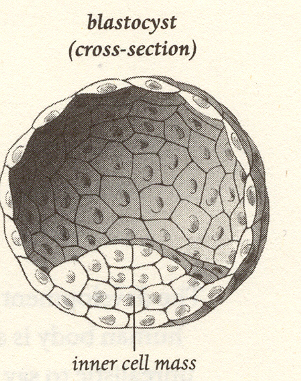 President Obama signed an order allowing for research on stem cells. On the one hand, many of these embryos would otherwise be thrown away, and it's hard to see how using them to save lives is worse than simply destroying them. On the other hand, if stem cell therapy is successful, there will be a huge market for them and pressure to create embryos for the purpose of killing them.
 Maybe that's still ok. After all, these embryos have no thoughts or feelings. If there is going to be a person in that blastocyst of cells, it hasn't happened yet. So, who gets hurt by using them for experiments?
Then again, it sets a dangerous precedent. At what point does it become no longer ok to kill the "unborn" (I hate that word, it sounds like a horror movie title)? At some point before birth, the baby becomes a full person, with feelings and thoughts and a right be have those feelings and thoughts given consideration and respect. What's more, we really have no idea when that is -- we're pretty sure at around 6 months the brain is fully functioning, but between around 40 days when the electrical signals in the brain first start and 6 months when everything is clearly going strong is all beyond the understanding of today's science, whose knowledge of brain functioning is in its infancy. As such, one can easily see the slippery slope being introduced. The allure of having a bright line at conception is compelling.
That said, the slope is long and not that slippery, so I'm not too worried. Then again, right now a fetus has no rights to any kind of respect even just before birth, so until our society starts to recognize and respect all those who can suffer as victims, we shouldn't be too complacent either.
Tuesday, March 10, 2009
!חג פורים שמח
 Happy Purim! Today we eat our hamantashen, triangle-shaped cookies available year round in any bakery in New York but made only on Purim everywhere else. Like the Jewish Halloween, kids get dressed up and make lots of noise to drown out the name of wicked Haman whenever he's mentioned. It's really odd as a Jewish holiday, for though it celebrates the Jews' deliverance from extermination, that seems to happen to Jews all the time, why does this particular incident deserve a big holiday? Also, it has no religious content at all, which I think makes it unique among Jewish holidays (except maybe for Holocaust Memorial Day). That makes it the perfect holiday for a cultural Jew like me :)
Interestingly enough, Queen Esther, the savior of the story, was a vegetarian. This was her way of keeping kosher without telling people she was Jewish. Go vegetarians! ;)
Here's your virtual shalach manot, Have a happy one!

Don't you wish you were Saudi
A 75-year-old widow in Saudi Arabia was sentenced to 40 lashes, 4 months in prison, and deportation after meeting with two 24-year-old men--her late husband's nephew and his friend and business partner--after she asked them to bring her five loaves of bread at her home. After delivering the bread, they were arrested by the religious police for "mingling". The men also were convicted and sentenced to lashes and prison. It is illegal for men and women who are not immediate relatives to mingle. [Source: AP]
Why do people go crazy about supposed Israeli oppression of Palestinians when all around them countries are doing so much worse, yet no one marches or campaigns? I feel like it must be antisemitism, but I'm open to hearing your ideas.
Why do people go crazy about supposed Israeli oppression of Palestinians when all around them countries are doing so much worse, yet no one marches or campaigns? I feel like it must be antisemitism, but I'm open to hearing your ideas.
Monday, March 09, 2009
Where to powder your nose
This blog involves a lot of giving but not so much receiving -- though thanks to those who introduced me to new songs named after guys like "Samson" and "Jimmy Mack" -- but that doesn't stop me from trying. Up today: New York City's most special bathrooms.
An odd category for sure, and one appreciated by few, but it's because of the very fact that I expect nothing when visiting a restroom that I have been so impressed by those rare occasions when restaurants have turned it into an experience. Here's my top three, in order of discovery:
1. Bar 89. The unisex bathroom here has transparent stalls that become magically opaque when you lock them (via the magic of liquid crystal boojums, to be specific).
 2. Vynl. This record-themed restaurant has individual bathrooms, each made out to be a star's dressing room from the outside, and when you choose your favorite star, the inside is made out about that musician: a mosaic on the wall, a doll dressed like the star in question, and that singer's music pumped through the speakers. With choices like Elvis, Dolly Pardon, and Nellie, there's something for everyone to feel mediocre about.
3. Peep. This hip above-average Thai restaurant includes bathrooms hidden behind a mirrored wall which, when you enter, you realize are one-way mirrors. That's right, from inside you're looking out at the customers as if through a glass window. Of course, you know they can't see you, but it sure feels like they might! The wall is transparent to you! Very odd feeling. (In an additional twist, instead of a mirror above the sink they have a screen silently playing 80's movies.)
Ok, now it's time to receive. Most interesting restrooms of which you're aware?
An odd category for sure, and one appreciated by few, but it's because of the very fact that I expect nothing when visiting a restroom that I have been so impressed by those rare occasions when restaurants have turned it into an experience.
Here's my top three, in order of discovery:1. Bar 89. The unisex bathroom here has transparent stalls that become magically opaque when you lock them (via the magic of liquid crystal boojums, to be specific).
 2. Vynl. This record-themed restaurant has individual bathrooms, each made out to be a star's dressing room from the outside, and when you choose your favorite star, the inside is made out about that musician: a mosaic on the wall, a doll dressed like the star in question, and that singer's music pumped through the speakers. With choices like Elvis, Dolly Pardon, and Nellie, there's something for everyone to feel mediocre about.
3. Peep. This hip above-average Thai restaurant includes bathrooms hidden behind a mirrored wall which, when you enter, you realize are one-way mirrors. That's right, from inside you're looking out at the customers as if through a glass window. Of course, you know they can't see you, but it sure feels like they might! The wall is transparent to you! Very odd feeling. (In an additional twist, instead of a mirror above the sink they have a screen silently playing 80's movies.)
Ok, now it's time to receive. Most interesting restrooms of which you're aware?
Sunday, March 08, 2009
Happy Birthday Angela
 With the bout of nice weather, I spent the entire day in a T-shirt -- part 4am at night. In addition to more rock climbing, I joined Angela's birthday crew at China One, and then in the wee hours of the morning slipped into Katz's Deli as the were closing for a knish (which is a common food here in NYC, for all you elsewhere readers who probably haven't heard of it). This famous landmark is best known as the location of the
 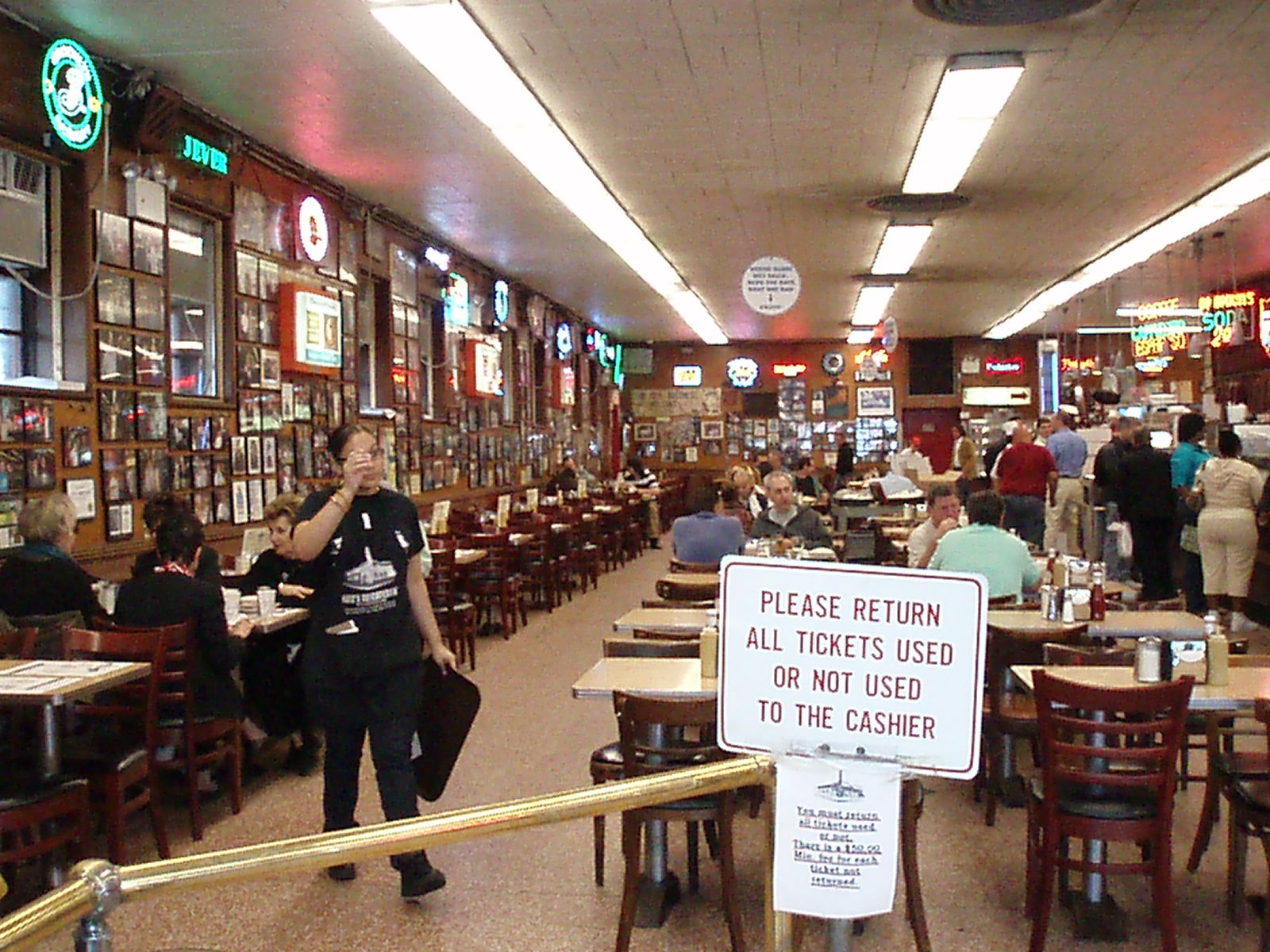 orgasm scene from When Harry Met Sally, which frankly surprises me because that was a rather unremarkable movie. Can you think of any other spots made famous in film? There's Cafe Lalo from You've Got Mail, and there's Serendipity 3 from Serendipity. Do you know of anyplace else?
(If you count TV, there's Sex and the City's Magnolia Bakery, and Seinfeld's Tom's Restaurant. Anything else?)
Saturday, March 07, 2009
Support for Mr. Bashir
 Leaders from Hamas, Syria, and Iran arrived in Khartoum today to express support for Sudanese president Bashir, who has been indicted for crimes against humanity by the International Criminal Court. This man is responsible for the mass murder and rape of millions of innocent people based on their ethnicity. He gives guns to bands of people who go to villages and slaughter everyone, who rape women to give them "Arab babies", who take people as slaves. First all of southern Sudan, and now Darfur, has been swept by such crimes for decades now. And these countries stand with this brutal mass murderer (presumably because he is an Arab and an Islamist?).
(The other day Mr. Bashir, angry about his indictment, kicked out aid agencies caring for millions of people. Hundreds of thousands of Sudanese will be without water within 48 hours.)
China, who supplies the weapons and funds in return for oil, shows craven indifference. But these guys, boy, they truly are an axis of evil.
Friday, March 06, 2009
I'm a Jaydub
 I've been learning about New York's 75,000 member Syrian Jewish community, the world's largest. Called "S.Y."s in slang, they refer to themselves as "the community", which sounds to me rather like a cult, and their insularity makes it seem like that description isn't so far off. They're generally like any orthodox Jewish community, though they wear modern
  (if conservative) clothes, but they have their own food culture consisting of stuff like sambusak, kibbeh, and lahmajin (see pics). Also unique among Jews, for 80 years now they ban any conversions to Judaism. Anyone who marries a non-Jew, even if converted, is cut off from the community, as are the kids of converts. It's common for SYs to have never even known a non-Jew (or even an Ashkenazi Jew).
  They have hard-core sexist gender roles, which includes a focus on beauty for women that leads plastic surgery to be common. They discourage going to college, get married very young and have tons of kids, and generally have their own little world going on. That said, they seem not nearly as extreme in cultish insularity as Brooklyn's Hasidic sects like Satmar, which are not even part of the same universe as we are. It's amazing what goes on in this city.
Jerry Seinfeld and Paula Abdul are both part Syrian Jew, though they're clearly not part of "the community." The most famous (or infamous) real SY is probably Crazy Eddie.
SYs refer to Ashkenazi Jews (like myself) as Jaydubs -- from JW in "jew", which is odd because they're Jews too.
Wednesday, March 04, 2009
Famous Columbians
 You may know that my home town of Columbia, Maryland, produced Edward Norton and Linda Tripp. I've learned that CNN White House correspondant Suzanne Malveaux went to Centennial High School. Frankly, I'm not satisfied, we need better representation in the pantheon of luminaries. If you are from Columbia, I am therefore burdening you with the obligation to go out and represent, yo.
Tuesday, March 03, 2009
ADD: What's in a name?
I was reading a book about ADD, having recently met several people on ADD medicine, and while I can't say I've remotely figured out the difference between a person with this condition and a normal person (since normal people do daydream, procrastinate, thrill-seek, and so on), and while I can't even say this is clearly a disorder rather than a personality-type (or, really, a wide array of different personality types), there is one thing that struck me. The author said that, so often, a big part of treatment happens just in telling people they have ADD. There's a sense of relief in knowing that what they'd always considered laziness or loserness has a name.
This reminds me of someone I knew as a teenager saying, with clear satisfaction, that her psychologist told her that her teenage anger and rebellion was a common psychological condition. At the time, I was shocked by the reaction. Had I been in her place, I would have been offended at dismissing my concerns and my anger as some psychological syndrome, implicitly invalidating the content of my feelings. But for her, hearing this was clearly an optimistic experience. Perhaps she didn't herself understand why she was in turmoil, perhaps she didn't believe in the content of her feelings either, but felt out of control and took comfort in the fact that there wasn't something wrong with her.
This may not be the same thing as with ADD. But it's hard for me to see why taking laziness and loserness and giving in a name makes the person any less lazy or any less a loser. What's in a word? This fits a broader pattern that I have often noticed -- the incredible power of giving something a word. In teaching physics, I used to avoid definitions of physics words like "energy" and "power" as semantic distractions, but I found that this was a mistake, that the meaningless process of giving these things a discrete name changes the way students think, creates useful boxes in the brains, makes these concepts more real in some sense. In linguistics, the Sapir-Whorf hypothesis is that the words we use influence how we think, and while it is controversial and not widely accepted, my anecdotal experience supports that fact that just giving something a name changes the way people think about it.
These are all flights of broad generalization from the kernal of ADD. Putting aside the weight of words, I tried to understand why having a name for something makes these people feel better. Perhaps it's that the same is a "disorder", which though stigmatizing (the author thinks it's a bad name and prefers the term "syndrome"), puts the condition in the category of a disease rather than a personal failing, and therefore takes away feelings of personal responsibility for one's falling short. Or, perhaps people feel that, if their condition has a name, then that means there is a treatment, which gives them hope. I'm not sure that these reactions make sense: even if the condition were a moral failing, like a simple laziness linked to no brain chemistry, one could still give it a name ("laziness syndrome"), and doing so wouldn't mean that the lazy people are any less at fault for not trying, and neither would doing so increase the chances for a treatment since there are obvious treatments for laziness that anyone can think of (encouragement, electric shocks...). But perhaps it need not be rational. Giving it a name may sound like it's a treatable disease outside of their control, and the psychological power of choosing the right marketing term may bring relief.
This reminds me of someone I knew as a teenager saying, with clear satisfaction, that her psychologist told her that her teenage anger and rebellion was a common psychological condition. At the time, I was shocked by the reaction. Had I been in her place, I would have been offended at dismissing my concerns and my anger as some psychological syndrome, implicitly invalidating the content of my feelings. But for her, hearing this was clearly an optimistic experience. Perhaps she didn't herself understand why she was in turmoil, perhaps she didn't believe in the content of her feelings either, but felt out of control and took comfort in the fact that there wasn't something wrong with her.
This may not be the same thing as with ADD. But it's hard for me to see why taking laziness and loserness and giving in a name makes the person any less lazy or any less a loser. What's in a word? This fits a broader pattern that I have often noticed -- the incredible power of giving something a word. In teaching physics, I used to avoid definitions of physics words like "energy" and "power" as semantic distractions, but I found that this was a mistake, that the meaningless process of giving these things a discrete name changes the way students think, creates useful boxes in the brains, makes these concepts more real in some sense. In linguistics, the Sapir-Whorf hypothesis is that the words we use influence how we think, and while it is controversial and not widely accepted, my anecdotal experience supports that fact that just giving something a name changes the way people think about it.
These are all flights of broad generalization from the kernal of ADD. Putting aside the weight of words, I tried to understand why having a name for something makes these people feel better. Perhaps it's that the same is a "disorder", which though stigmatizing (the author thinks it's a bad name and prefers the term "syndrome"), puts the condition in the category of a disease rather than a personal failing, and therefore takes away feelings of personal responsibility for one's falling short. Or, perhaps people feel that, if their condition has a name, then that means there is a treatment, which gives them hope. I'm not sure that these reactions make sense: even if the condition were a moral failing, like a simple laziness linked to no brain chemistry, one could still give it a name ("laziness syndrome"), and doing so wouldn't mean that the lazy people are any less at fault for not trying, and neither would doing so increase the chances for a treatment since there are obvious treatments for laziness that anyone can think of (encouragement, electric shocks...). But perhaps it need not be rational. Giving it a name may sound like it's a treatable disease outside of their control, and the psychological power of choosing the right marketing term may bring relief.
Monday, March 02, 2009
Guy songs?
 Have you ever noticed there are so many songs named after a girl who is the object of the singer's affection? Michelle, Julia, Lola, Cecilia, Roxanne, Martha My Dear, Hey There Delilah, Kathy's Song, Sweet Jane, Maggie Mae, Peggie Sue, Barbara Ann, and so on ad practically infinitum. And yet, can you think of a single song named after a boy love interest? There are songs named after boys that aren't love songs -- Johnny B. Goode, Richard Cory, Hey Jude -- but can you think of a single girl crooning for her guy? I challenge you to think of one... or to come up with an explanation for this extreme disparity!
Subscribe to:
Posts (Atom)


